
The state political situation has gotten very tense as Chief Minister Joseph Vijay and DMK leader and Leader of the Opposition Udhayanidhi Stalin are in a very heated political fight. The latest debate involving Udhayanidhi Stalin on actress Trisha has led to public debate and political protests. There is now even more tension between Udhayanidhi and his supporters as the chief minister has been taken into police custody for questioning and the state is already very tense.
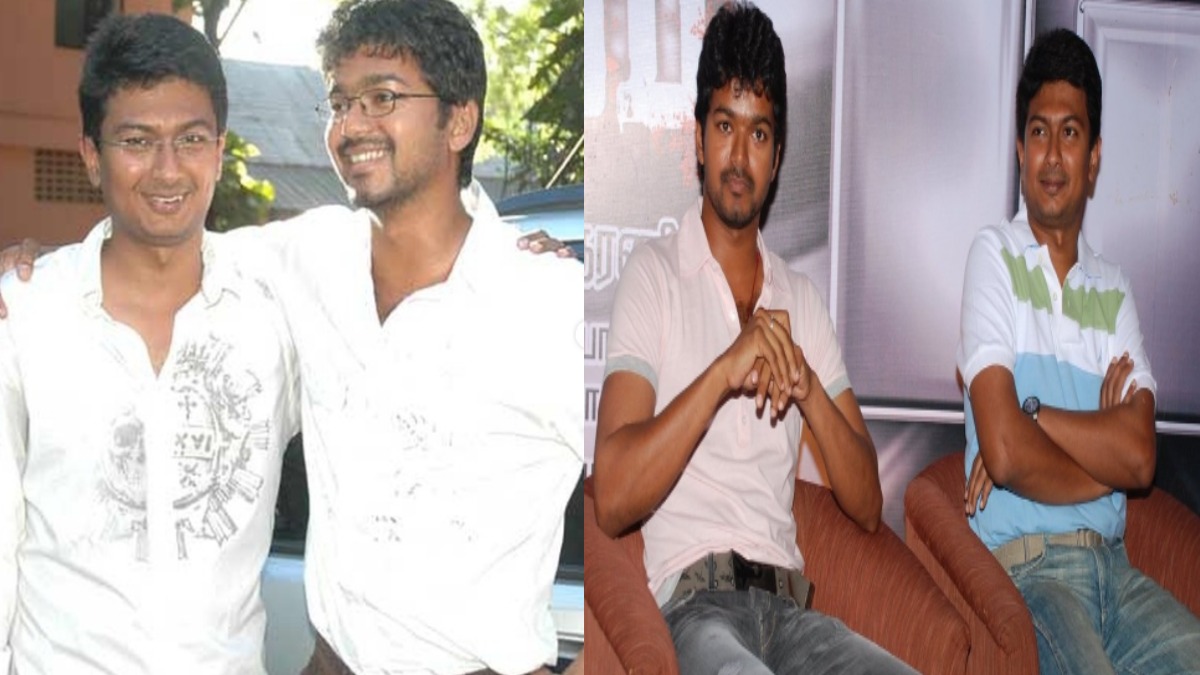
Another chapter from Tamil cinema has recently been revived on social media, reminding fans that the two leaders once had a good relationship in Kollywood. They have gone from filmmakers as friends and allies to political foes in the film industry, so the relationship has been one of Tamil Nadu's most talked-about stories.
Joseph Vijay and Udhayanidhi Stalin’s relationship dates back nearly two decades. In 2008, Vijay appeared in the action-comedy film Kuruvi with actress Trisha, directed by Dharani. The film was made by Red Giant Movies, the production company that Udhayanidhi Stalin launched. At the time, Udhayanidhi was getting into the Tamil film industry as a producer, and Kuruvi was among his first big movies under that banner.
Vijay was influential in Udhayanidhi’s first film production, industry insiders say. Their collaboration in this period also showed that they had a good relationship with each other and shared an understanding about Tamil cinema. They did not work together again after that, but the mutual respect that existed between the two was well known in the industry.
Years later, they crossed paths in cinema again when Red Giant Movies acquired the Tamil Nadu theatrical distribution rights for Vijay's blockbuster film Leo in 2023. Leo was one of the biggest Tamil releases of the year, and the collaboration ensured that in spite of their political careers, the two were still in professional contact.
But the politics had changed a lot as Vijay went from being one of the big stars of Tamil cinema to being active in public life. His political rise culminated in becoming the Chief Minister of Tamil Nadu, and Udhayanidhi Stalin, who is already a key player in DMK, is now leading the opposition in the state assembly as Leader of the Opposition.
Today, the former film partners are on the opposite side of Tamil Nadu politics. The Assembly is now the place where their ideological disagreements are held up to them, and the collaborative atmosphere which they once had in the entertainment industry is gone. Political debates, policy differences, and public comments have turned what was once a professional association into a political rivalry closely watched by the public and the media.
The recent controversy surrounding Udhayanidhi Stalin has only made public attention more focused on their past relationship. Social media platforms are flooded with old photographs, film stills, and behind-the-scenes moments from Kuruvi and other events, with many users saying they are surprised at how much their relationship has changed over the years.
Political observers note that such transitions are not unusual in Tamil Nadu, where cinema and politics have historically been connected. Numerous actors have gotten involved in politics, and the relationships formed in the film industry have often taken new directions once political ambition is involved.
We are reminded of the cinematic history of Joseph Vijay and Udhayanidhi Stalin, but now they represent two different political ideologies and visions for leadership. Their exchanges have become the talk of Tamil Nadu today in the media, and they are being followed by supporters, critics, and political analysts alike.
As political trends of the moment go on, the difference between their former collaboration as Kollywood actors and current competition in governance is an inspiring example of how careers and relationships change over time. What started as a successful film collaboration in 2008 has transformed into one of Tamil Nadu’s most watched political contests, reflecting the state’s unique blend of cinema and politics.









Comments
Please to leave a comment on this article.