

Swara Bhasker Clarifies Jauhar Remark on Padmaavat Climax, Says She Never Called Sati Cowardly
Swara Bhasker has given her stand on the ending of Sanjay Leela Bhansali’s Padmaavat and said she did not refer to Sati or Jauhar as cowardly. She had to answer to the accusation that she was critical of the historical practice.
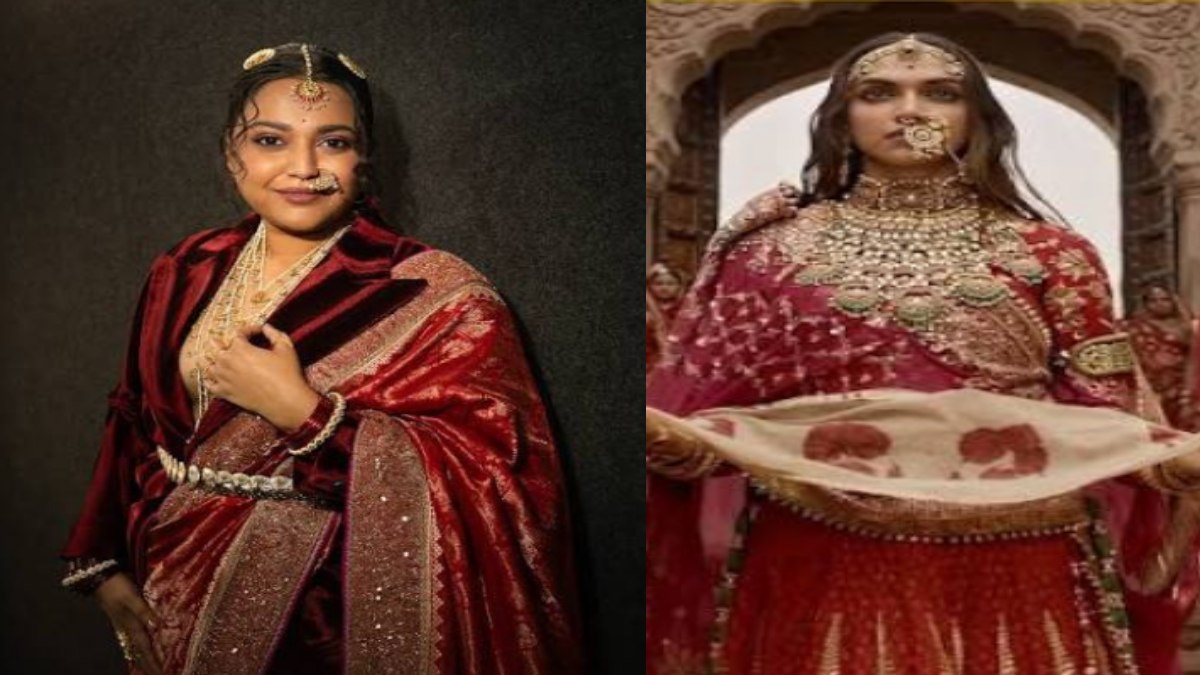
The situation is linked to Bhasker’s earlier response to Padmaavat, the 2018 historical drama with Deepika Padukone, Ranveer Singh and Shahid Kapoor. The film is inspired by Malik Muhammad Jayasi’s 16th-century epic poem Padmavat, and there was much debate even prior to the release of it as it portrays Rajput history, Queen Padmavati and Jauhar.
Bhasker had previously criticised the ending of the film for its portrayal of women choosing Jauhar. Her comments were cited as a talking point because the climax shows Padmavati and other women entering fire rather than falling into the hands of Alauddin Khilji’s forces. The scene was held up as the culmination of the film’s story and one of the most controversial elements of the film.
In her latest clarification, Bhasker has tried to distinguish between criticising a cinematic portrayal and judging the women or the historical practice associated with it. She had not said that any woman who performed Sati was a coward, she said.


Padmaavat itself became one of the most controversial Bollywood releases of its time. Sanjay Leela Bhansali directed the film; but there were protests from various groups before it was released. On the subject of Rajput history and Padmavati, the makers always claimed that the film is fiction based on a book, and there were many complaints from people.
Deepika Padukone’s portrayal of Padmavati was also at the heart of the movie’s reception. Her character is the Rajput queen whose story comes to a close in the Jauhar sequence. The performance and the production design attracted widespread attention and the climax was a topic of debate when it came to how historical and cultural practice should be portrayed on screen.
Bhasker’s comments shed light on a larger debate in Indian cinema about historical representation, artistic interpretation and contemporary criticism. Whether or not films based on historical figures and traditions should reproduce practices from the past without commentary or contextualise them for modern audiences is a question to be answered.
Jauhar and Sati are also distinct historical concepts, still discussed in public. Jauhar refers to the collective self-immolation of women in some wartime situations, while Sati refers to the practice in which a widow was expected or chose to die after her husband’s death. The two practices have different historical contexts and discussions about them should be careful to not make them interchangeable.

The discussion on Bhasker’s statement shows how comments made about popular films can take years to resurface after a movie’s release. Social media can amplify old interviews and statements, and bring them back into public discussion without having the full context in which they were originally made.
Bhasker’s new clarification seems to be an attempt to put her position on record and avoid her comments from being interpreted as an attack on women who were associated with historic practices. Her main point is that criticism of the portrayal of an event in a film should not automatically be a judgment against those depicted in that depiction.
Padmaavat remains one of the most discussed historical dramas in contemporary Hindi cinema. Beyond its box-office performance, the film sparked conversations about history, cultural identity, artistic freedom and the responsibilities of filmmakers when portraying sensitive traditions.
Bhasker’s clarification has brought back those issues again and once again the film’s debates are still being debated in the years after it was released.
As the debate goes online, the actor’s clarification will only make it more evident the distinction she has sought to draw: questioning the representation or messaging of a movie sequence is different from labelling the women involved in historical practices. Her response therefore adds another layer to the long-standing public debate surrounding Padmaavat, Deepika Padukone’s character and the controversial climax.




 Latest Movies Trailer








Comments
Please to leave a comment on this article.