

Swara Bhasker’s Padmaavat Comments Spark Fresh Debate Over Jauhar, Honour And Representation
Swara Bhasker has once again found herself at the centre of an online debate about her criticism of Padmaavat and its depiction of jauhar. Eight years after writing a letter to filmmaker Sanjay Leela Bhansali, she has spoken in person about her concerns recently at an event in Delhi, and explained why the portrayal had made her particularly angry. Her comments have since triggered strong reactions on social media, with users divided over whether she was criticising the historical practice itself or how it was depicted in the film.
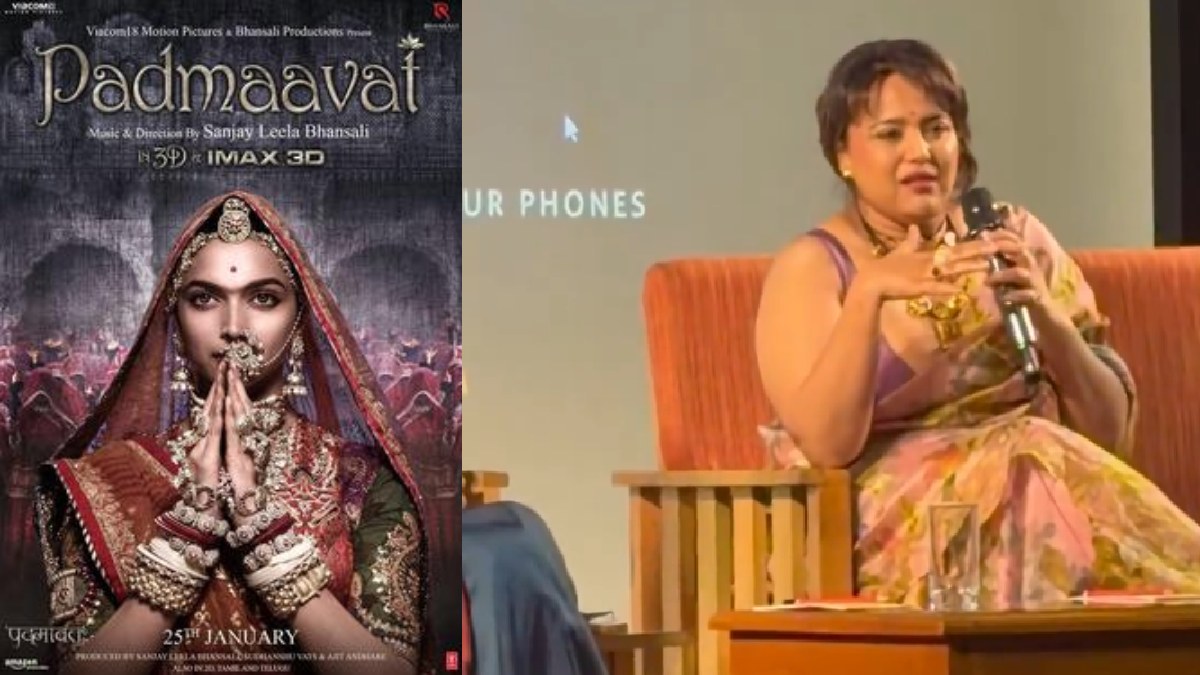
Bhasker had strongly objected in her earlier open letter to what she perceived as the glorification of jauhar and sati in Padmaavat. Directed by Bhansali and starring Deepika Padukone, Ranveer Singh and Shahid Kapoor, there was a lot of talk about Rajput history, honour and sacrifice even before the film was made public. Bhasker’s letter became one of the most widely read reactions to the film, so much so that she questioned the idea of celebrating women choosing death over surviving sexual violence or captivity.
Bhasker gave an explanation of her criticism again at the recent Delhi event. She said showing thousands of women collectively committing jauhar in the name of honour could have worrying implications in the present day. Such images may also cause people to think that death is preferable to going through sexual violence, she said, and that rape survivors who choose to survive have a higher probability of being stigmatized.
Bhasker’s new comments have triggered a heated debate on social media. Bhasker’s critics said she was ignoring the historical context in which jauhar occurred and that jauhar was not something to be taken simply as an individual decision following an assault, but within the context of warfare, defeat, captivity, enslavement and sexual violence against women. They also objected to Bhasker’s attempt to impose a modern view on a practice which is rooted in a very different historical and social context.


One part of online criticism focused on the actress’s reference to rape survivors. Users argued that comparing death and survival after sexual violence is deeply personal and no one else should be able to determine how survivors should understand their own trauma. The historical discussion must also be mindful of both the circumstances of jauhar and the experiences of women who have survived sexual violence, they say, when we talk about the experience of women in their own lives.
Bhasker also found support from some social media users who said her comments were taken out of context. Defenders countered that she was not calling women who committed jauhar “cowards”. Instead, they took her remarks as a critique of social conditioning that led women to believe that their honour was more valuable than their lives.
This distinction has become an important part of the debate. Bhasker’s position is that historical figures and practices can be discussed with empathy yet still question the values that surrounded them. From this point of view, the criticism is directed at the romanticisation or glamourisation of jauhar in popular cinema and not the women themselves.
The controversy also underscores the challenges filmmakers face when adapting historical or semi-historical stories to mainstream audiences. But while historical practices are enacted in cinema and are portrayed with a sense of drama, how we perceive that practice also plays a role. When a difficult or controversial tradition is depicted in visual detail, it may be seen as historical documentation or cultural tribute and not as glorification.

Padmaavat is still one of the most highly debated Bollywood movies of the past decade. There were protests and controversy prior to its launch, and the historical interpretation, characters and Rajput identity were argued about in the film. Bhansali said it was a work of fiction inspired by the poem Padmavat and the debate surrounding its depiction of history was still in the air.
Swara Bhaskar speaks about her letter to filmmaker Sanjay Leela Bhansali on the scene of Jauhar in the movie Padmavat pic.twitter.com/6X4Z0SvFtC
— Yeshi Seli (@YeshiSeli) August 31, 2026
Bhasker’s comments have also reopened a debate about how to depict historical suffering to filmmakers and whether to romanticise acts of self-sacrifice associated with notions like honour. And it raises questions about how we should get audiences to look at those practices in the context of social conditions vastly different from those we see today.
The opposing responses show there is no clear consensus. Bhasker’s criticism represents an important challenge to the romanticisation of women’s suffering and the notion that honour should be placed above survival. For others, her comments illustrate a lack of historical context around jauhar and the conditions women faced in times of war and conquest.
The actress’s comments have once again placed Padmaavat at the intersection of cinema, history and contemporary social values as the debate continues online. What started with an open letter nearly a decade ago has resurfaced as a broader discussion of representation, historical memory, women’s agency and filmmakers’ responsibility for depicting traumatic chapters of the past.



 Latest Movies Trailer







Comments
Please to leave a comment on this article.