
Suzanne Bernert (Yeh Rishta Kya Kehlata Hai actress and Indian TV actress, who has been working in the Indian television industry for more than 30 years and has been seen as an advocate for advertising, women's empowerment and the portrayal of women in commercial ads as a result of her criticisms on an advertisement written by actress Kriti Sanon during Raksha Bandhan season.
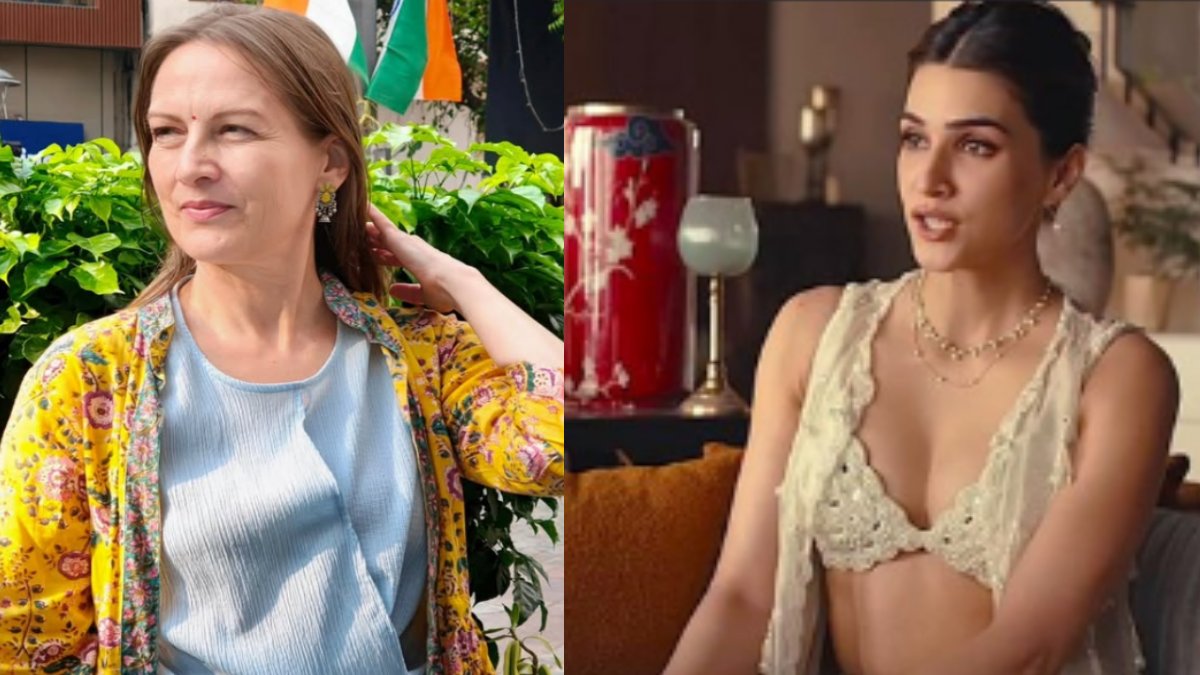
Bernert questioned whether wearing women in revealing materials should automatically be associated with empowerment. “Less clothes is not women empowerment,” she said, focusing on the distinction between individual choice, commercial representation and genuine empowerment.
The discussion is at the height of the festive season, when big brands in India launch campaigns on Raksha Bandhan. The festival is about siblings and on this occasion of the festival we often try to present contemporary interpretations of relationships, family and gender roles. And as brands are fighting about the market share, celebrity-led campaigns have become an important part of festive marketing.
Kriti Sanon, one of Bollywood’s most popular actresses, has appeared in fashion, beauty and lifestyle campaigns. Celebrity endorsements can get a lot of attention as advertising topics are often social or cultural. So reactions from other public figures can really make a brand advertisement into a big conversation.
Bernert’s criticism is about the way women’s empowerment is expressed in terms of visual representation. Her point raised is whether clothes should be tied to empowerment as a matter of course. Her supporters might say that commercial advertising often relies too much on appearance and glamour while genuine empowerment is about women’s ability, independence, education, professional achievements and freedom to decide for themselves.
At the same time, the discussion of women’s clothing can be very complex because individual choice is a key part of personal autonomy. What one person may be considered empowering may not be viewed the same way by another. Clothing preferences differ from person to person, culture to culture and situation and empowerment is not a one-size-fits-all approach.
This is why Bernert’s comments have triggered conversation rather than the discussion being finished. Her argument calls for us to think how advertising uses concepts like freedom, confidence and empowerment to market products. Brands in general attach themselves to progressive ideas, but viewers might interpret the messages differently if the advertisement is presented differently.
The controversy also shows how social media is shaping celebrity conversations. The way an actor or public figure might say something on social media and get an audience will go viral, and people will respond, and then the debate will pick up rapidly. And ads that might have been kept on television or billboards, now they’ll be argued instantly in a torrent on the internet.
For celebrities such discussions are particularly difficult. Actors are frequently actors, public figures and brand ambassadors. And professionals’ professional choices can bring in a lot of people, colleagues and industry personalities’ opinions. When an advertisement has a socially sensitive theme, the response is more than the commercial message.
Raksha Bandhan campaigns have traditionally been about sibling affection, gifts and family relationships. In recent years, though, brands have started to include such more contemporary themes in their campaigns (gender equality, women’s independence and family dynamics). As for larger changes in Indian advertising, companies are now looking to connect products with social conversations.
The advertisement is also just part of something larger: what should women’s empowerment look like in popular culture? Empowerment is so much more about the ability to choose a look and make decisions and not a set of clothes, but for others it’s in the best interest of advertising to be about women’s accomplishments and independence.
The two perspectives can coexist and the conversation does not necessarily need to lead to a single definition. Women's empowerment can be freedom of choice, access to education, professional opportunities, financial independence, safety and the ability to make decisions about one’s own life.
The issue is also a lesson to advertisers on the messages attached to their campaigns. Consumers are buying things as well as values and what brands say about them. Celebrity-led advertising can be very powerful for that because people usually associate the message with the celebrity who is endorsing it.
For Kriti Sanon, it means an advertisement was published around a famous Indian festival. Suzanne Bernert’s remarks have helped her come into the public mind to speak about how women are portrayed in entertainment and advertising.
The debate, however, is less about one advertisement, and the bigger question is how popular culture defines empowerment. Bernert’s statement has led viewers to question whether visual presentation alone should be used as a symbol of women’s freedom.
As social media continues to amplify celebrity opinions, conversations about advertising and representation will become increasingly visible. In the Raksha Bandhan debate it shows that audiences aren’t passive consumers of advertisements; they are more than willing to analyze, question and debate the messages we give them.
The debate of Suzanne Bernert’s remarks and Kriti Sanon’s advertisement is therefore representative of a much larger cultural discussion. Whether fans agree or disagree with Bernert, the discussion makes for a critical examination of the way women’s choices, appearances and achievements are portrayed in the mainstream media.













Comments
Please to leave a comment on this article.