
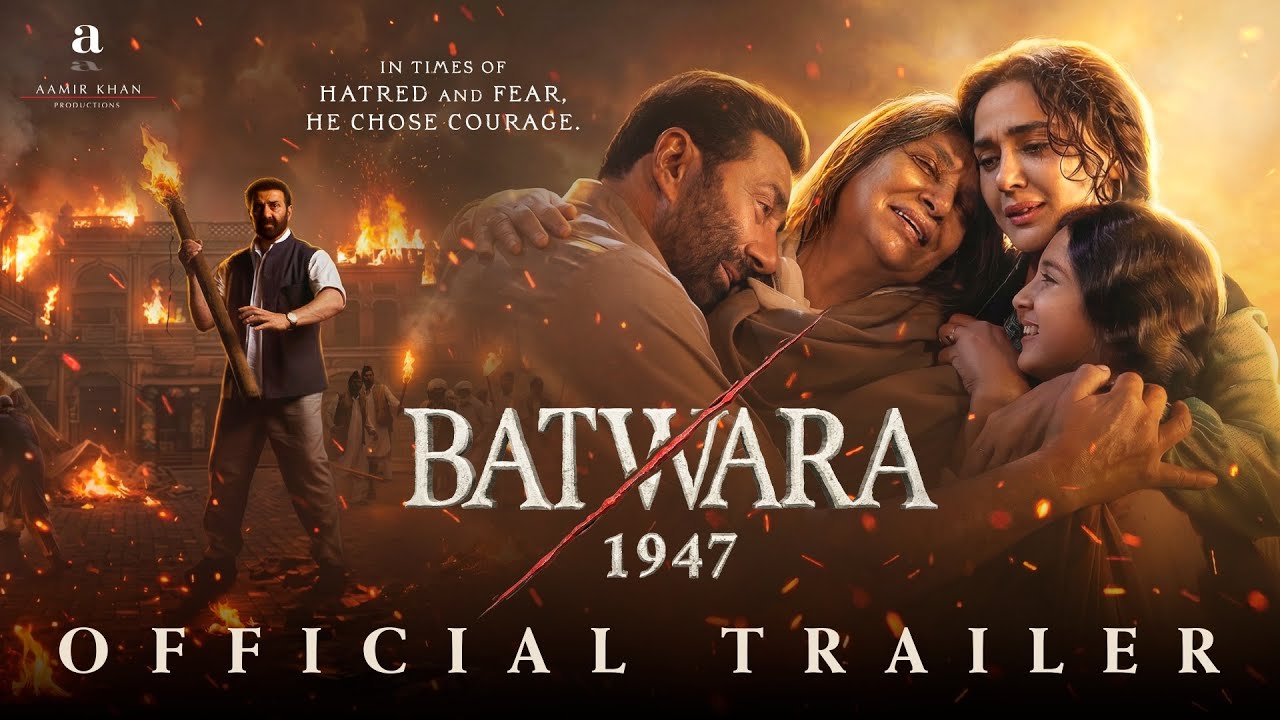
Batwara 1947 arrives with much anticipation and comes with Sunny Deol and director Rajkumar Santoshi after almost three decades. Set against the trauma of India’s Partition, it is a very human story about displacement, family, survival, and compassion. Early audiences have been pleased with its emotional impact and performances, but the initial feedback has been mixed.
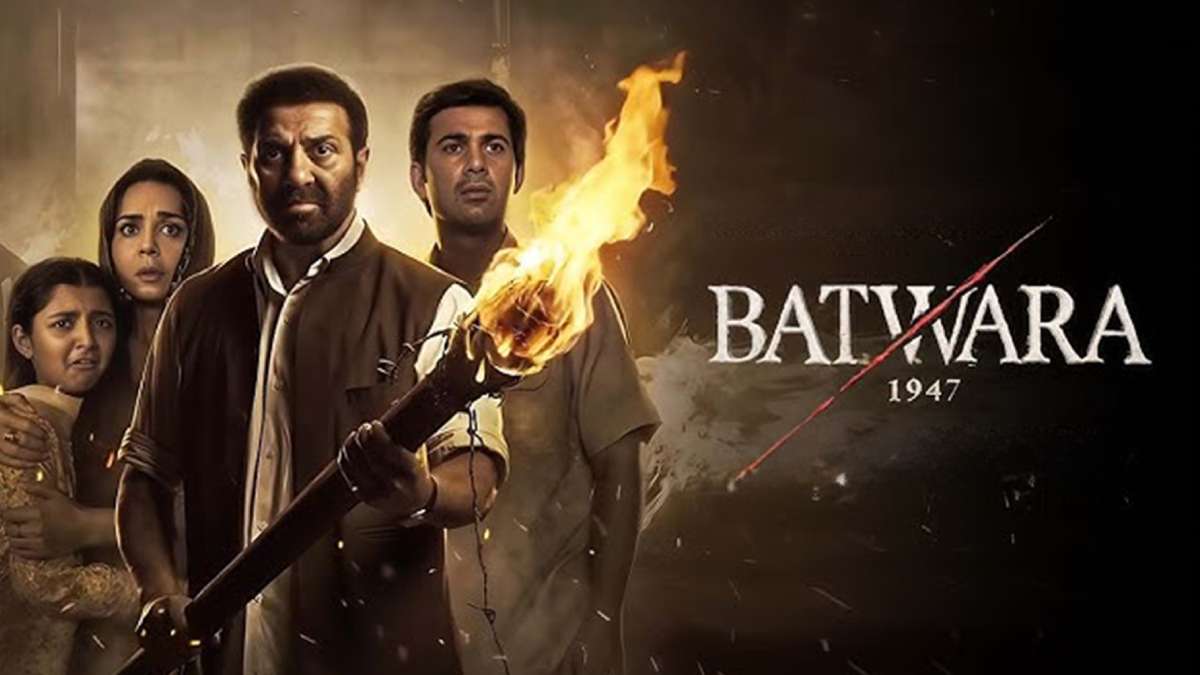
The story.
The film is set during the turbulent period surrounding the 1947 Partition of India and captures the turbulence of India, the people, who found themselves stuck in an extraordinary humanitarian crisis.
Batwara 1947, unlike Partition’s political events, emphasizes the human cost of displacement—families scattered from one another, people forced to leave their homes, and communities grappling with violence and uncertainty.
Sunny Deol plays Sikandar Mirza, a character in need of help and is forced to make difficult decisions as the political situation around him rapidly deteriorates. It is a movie about courage, humanity, sacrifice, and the need to protect your loved ones.
Sunny Deol's Performance
Sunny Deol is still the film's biggest attraction.
His performance is said to carry the emotional weight of very important scenes—family, displacement, and the uncertainty about Partition. Early reviews are particularly highly favorable to his performance.
Importantly, the character is different from Tara Singh in the Gadar franchise, despite both films being set against the Partition era. Deol himself has pointed out the difference between the two characters.
Preity Zinta and Shabana Azmi
Preity Zinta makes her big screen return and brings emotional warmth to the film. Early reactions have highlighted her presence as one of the positive things.
Shabana Azmi is another standout. Many of the early reviews have praised her performance, and her character has added emotional depth to the story.
The supporting cast, including Ali Fazal and Karan Deol, also plays a part in this ensemble-based story.
Rajkumar Santoshi's Direction
Rajkumar Santoshi’s reunion with Sunny Deol is one of the movie’s major selling points. The two worked together on Ghayal, Damini, and Ghatak before, and Batwara 1947 is their first major reunion in around 30 years.
Santoshi approaches Partition mostly from the human side and not from the spectacle level. The film’s best moments are when it focuses on ordinary people dealing with extraordinary circumstances.
Producer Ramesh Taurani said after watching the movie that it was a very moving and well-made story with a very emotional message, humanity, compassion, and resilience in it.
What Works
Sunny Deol's emotionally charged performance. Great supporting performances, which include Shabana Azmi. Preity Zinta's return and screen presence. A serious examination of Partition and its human consequences. Rajkumar Santoshi and Sunny Deol getting their reunion. Emotional family sequences and themes of compassion.
What Doesn’t Work
The film’s dark, serious, and emotional tone might not be appealing to a more usual commercial audience. Some early reactions have been less enthusiastic than the glowing pre-release reviews, suggesting that the movie’s pacing and narrative execution are likely to divide viewers.
The Independence Day release also puts Batwara 1947 in direct competition with Awarapan 2, which has recorded significantly stronger advance-booking numbers.
Verdict.
Batwara 1947 is best viewed as an emotional historical drama rather than another Sunny Deol-style action spectacle.
The film is by far the best in its attempt to humanize one of the darkest chapters of Indian history. Sunny Deol delivers a powerful performance, while Preity Zinta and Shabana Azmi add emotional depth. Rajkumar Santoshi’s focus on humanity and relationships gives the film a lot of heart.
But the heavy subject matter and measured storytelling may not work for each person.
Rating: ⭐⭐⭐½/5
Verdict: A sincere and emotional Partition drama played by Sunny Deol, Preity Zinta, and Shabana Azmi.











Comments
Please to leave a comment on this article.