
Alfred Hitchcock was one of the most influential filmmakers in the history of cinema and decades later the language of suspense is still in use. The so-called master of suspense (he would go on to direct more than 50 movies over the years) transformed psychological thrillers with his film techniques, his tension, the characters and stories that enticed people into thinking about what would happen next. He was born on 13 August 1899 in Leytonstone, London, England.
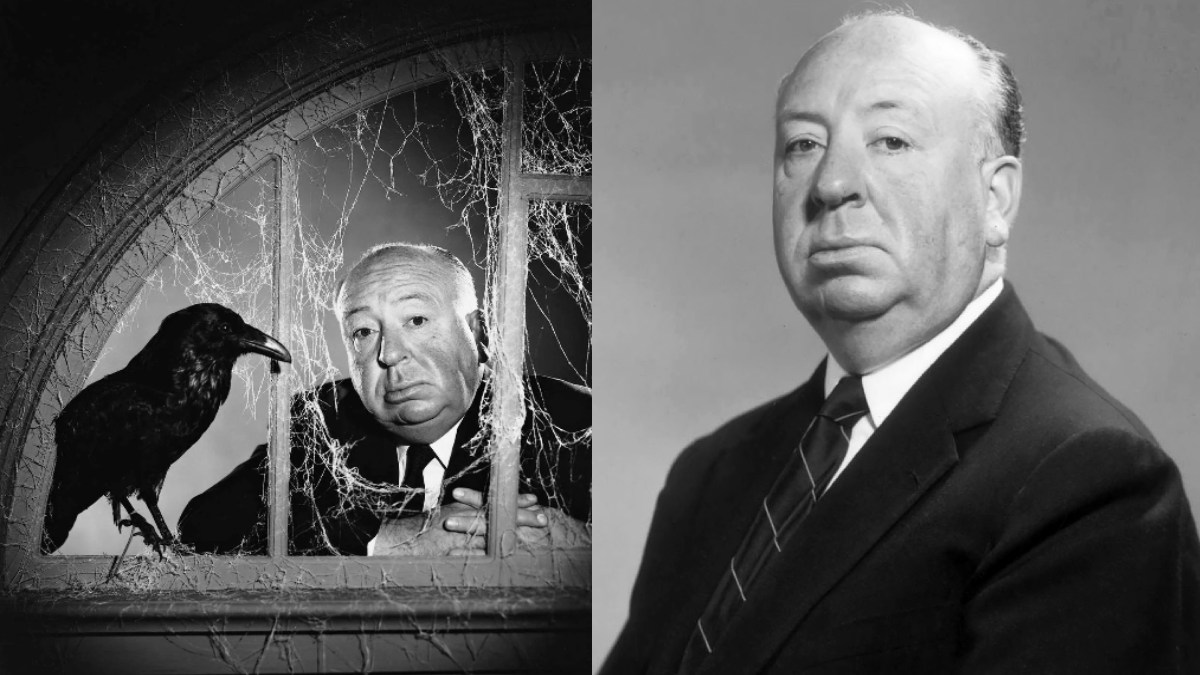
Sir Alfred Joseph Hitchcock was the youngest of three children born to William Hitchcock, a greengrocer, and Emma Jane Whelan Hitchcock. He was raised in a strict Catholic household in London. Childhood fear, guilt, punishment and anxiety would be the dominant themes in many of his films. Hitchcock had a bizarre perception of how ordinary situations could be things of suspense and psychological tension.
Hitchcock studied engineering and art at the school before he became a filmmaker. His early work in the British film industry was with silent films and his work was with title cards, screenwriting, editing and production. He learned the technical aspects of film from the start and he could develop the direction in the later years.
Hitchcock made his first film in 1925 with The Pleasure Garden. He would develop his style over the years, but his British thriller films like The 39 Steps in 1935 and The Lady Vanishes in 1938 were just as influential as those of Hollywood.
That success in Britain eventually brought him to Hollywood where he went to Hollywood and he had a very productive career. Hitchcock’s Hollywood filmography contains many of the world’s best classics: Rebecca, a film that won him the Academy Award for Best Picture and starred in 1940, among others. He has since directed Shadow of a Doubt, Rope and Strangers on a Train.
The 1950s were a prime time for Hitchcock. Rear Window, published in 1954, delved into the theme of observation, suspicion and voyeurism through the tale of a photographer who believes he has witnessed evidence of a crime. To Catch a Thief came out in 1955 and The Man Who Knew Too Much in 1956.
Hitchcock reached another artistic peak with Vertigo in 1958. The film’s exploration of obsession, identity and psychological instability has been thoroughly examined and is one of cinema’s most important works. Hitchcock would follow up with North by Northwest in 1959, a fast paced thriller in which mistaken identity, espionage and memorable set pieces were the themes.
Then came Psycho in 1960, probably one of the most important psychological horror and suspense movies ever made. Hitchcock’s editing, sound, framing and audience expectations changed our view of what mainstream cinema could do. The film showed how suspense can be built in the form of action but also in anticipation and uncertainty.
Hitchcock continued to explore psychological themes in movies like The Birds, Marnie and Frenzy. His work was so consistent in exploring fear, suspicion, obsession, guilt and mistaken identity.
Hitchcock's most recognizable trademark was his brief cameo performances in his own movies. These came to be a well-known feature of his movies and you could see audiences watching for the director somewhere in the story. His visual style was instantly recognizable via inventive camera movements, unusual perspectives, dramatic editing and controlled pacing.
Hitchcock worked with his wife Alma Reville, from a creative perspective. In 1926 they married and they had a daughter Patricia Hitchcock. The screenwriter and editor, Reville, was an important creative partner in Hitchcock's production and was in his films and films.
Hitchcock never won a competitive Academy Award for Best Director despite his huge influence. But his work received many major honours. He received an Academy Honorary Award in 1968, later received the AFI Life Achievement Award and the Golden Globe Cecil B. DeMille Award, and was knighted by Queen Elizabeth II in 1980.
Hitchcock died on April 29, 1980, in Los Angeles, California, at the age of 80. He was at the end of a long run and his influence on cinema was not over.
Hitchcock’s movies are still a big part of film education and analysis and filmmakers like Steven Spielberg, Martin Scorsese, Christopher Nolan and David Fincher have all relied on techniques and ideas relating to his work. His ability to turn the ordinary into a psychological experience has been particularly influential.
As film lovers celebrate Alfred Hitchcock’s birthday on August 13, his legacy goes beyond his many movies and his films. He changed the way filmmakers think of suspense, audience expectations, visual storytelling and psychological tension. He is still relevant today in the form of the mind-blowing movies that are still being watched (and studied) by new generations as filmmakers and I think that really great innovative filmmaking can last long after his/her creator is dead.




Comments
Please to leave a comment on this article.