

Donald Trump Pushes Federal Tax Breaks To Revive US Film Industry, Says Hollywood Has Become A ‘Total Disaster’
Trump has suggested federal tax incentives for the production of films and television in the United States and is hoping to bring entertainment jobs back to the US but not just Hollywood jobs for the American movie industry. It’s after meeting with the veteran actor and Hollywood ambassador Jon Voight, a well-known actor and Hollywood veteran, who Trump said he’d like to have the film industry back in America, and said he was concerned about the decline of domestic film production as a whole.
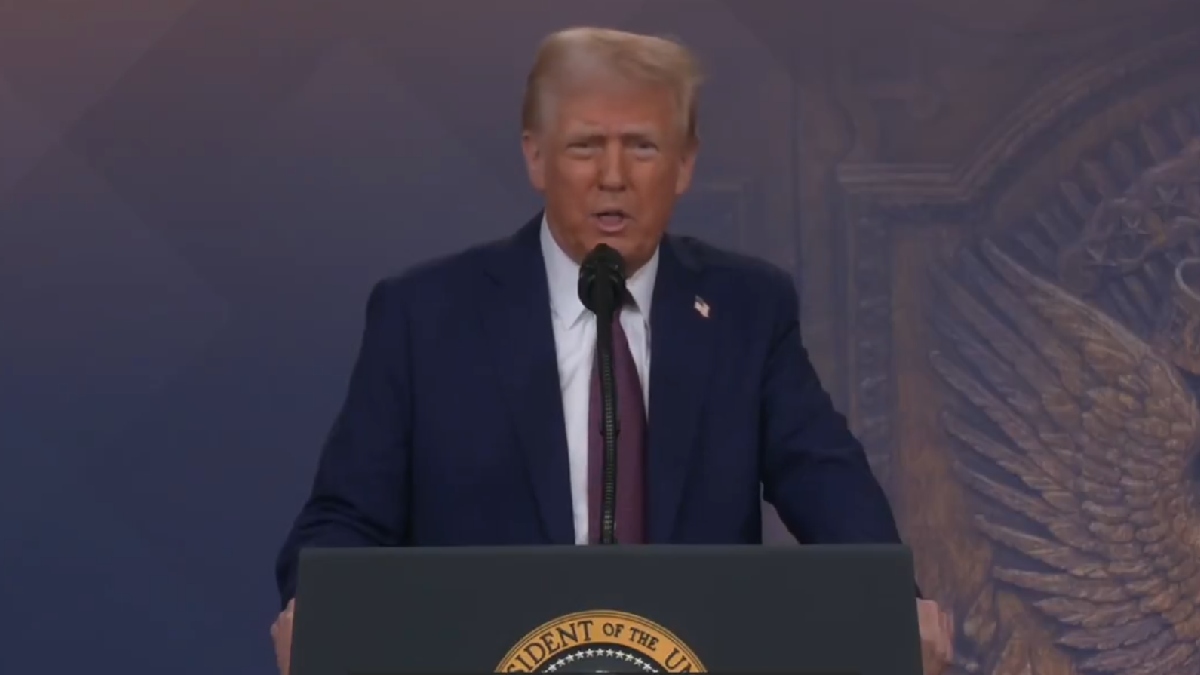
Trump discussed the proposal in a post on Truth Social, where he said Hollywood's bad state was a huge concern for entertainment and the US economy at large. “Many of the American film and television production has moved overseas, with a lot of the work going to countries like Canada,” the president said, where governments offer attractive financial incentives to studios and production companies.
Trump said the migration of productions has reduced the amount of work in traditional American production centres. He particularly alluded to California, a state in which Hollywood has historically been a huge driver of employment, tourism and economic activity, and that it’s also a major part of the culture.
In his meeting with Voight, Trump said they discussed ways to reverse the trend and make the United States a more attractive destination for major film and television projects. Federal production incentives may be key in the strategy, he said.


The president argued tax incentives should not be just a cost to the government. He said that the increased economic activity produced by film and television productions could ultimately bring considerably higher tax revenues to the US Treasury. Trump said the money spent on incentives could be recovered many times over through jobs, business activity and taxation, so much so through jobs that have been created and such an investment has been made.
The proposed policy would be the largest expansion of production incentives in the US. Many states already offer their own tax credits or financial incentives to attract movie and television productions. But with no nationwide federal production incentive, the competition from international production centres has been growing.
Canada, in particular, has a reputation as a major site for Hollywood productions because it has tax incentives, a well-established production infrastructure and a skilled workforce. A number of other countries also have programs to attract international film and television projects in such a way that production expenses become very much a hot market.
Trump’s last comments indicate that his administration wants to address that competition at the federal level. Not only would such legislation be beneficial to California, but studios would also have more capital to invest in American locations and hire domestic crews.


Trump also called for Republicans and Democrats in Congress to work together on the issue. He said meetings with congressional leaders from both parties were being arranged and suggested the legislation should be bipartisan because the entertainment industry supports jobs and businesses in states controlled by both political parties.
The economic argument is central to Trump’s proposal. Film productions can generate spending well beyond studios and will benefit hotels, restaurants, transportation companies, construction businesses, equipment suppliers and local employees. Large productions can also be beneficial to regional economies when crews spend weeks or months shooting in a particular location.
At the same time, creating a federal tax incentive would probably require lawmakers to carefully determine eligibility requirements, production thresholds and the size of the credits. Congress could also face questions about how to ensure that incentives generate enough domestic economic activity to justify their cost.
Hollywood is also dealing with changing production methods, increasing costs and rising competition from foreign markets, Trump said. And streaming services also have drastically changed the way movies and television shows are funded, produced and distributed and are giving rise to new business models while putting pressure on traditional industry models.
For Hollywood, a federal incentive might give studios another reason to keep more productions in the United States. But whether such a proposal can win broad support in Congress will depend on the details of the legislation and lawmakers’ thoughts on the long-term economic implications of such an approach.
For now, Trump’s meeting with Voight and his call for immediate congressional action signal a move to make domestic film production a bigger economic and policy issue. If lawmakers make progress, the resulting debate will determine whether the US introduces a nationwide incentive programme to compete directly with international film-production markets.





 Latest Movies Trailer









Comments
Please to leave a comment on this article.